Compensation Is Welcome, But Alone Isn’t Enough
Updated: Dec 1, 2025
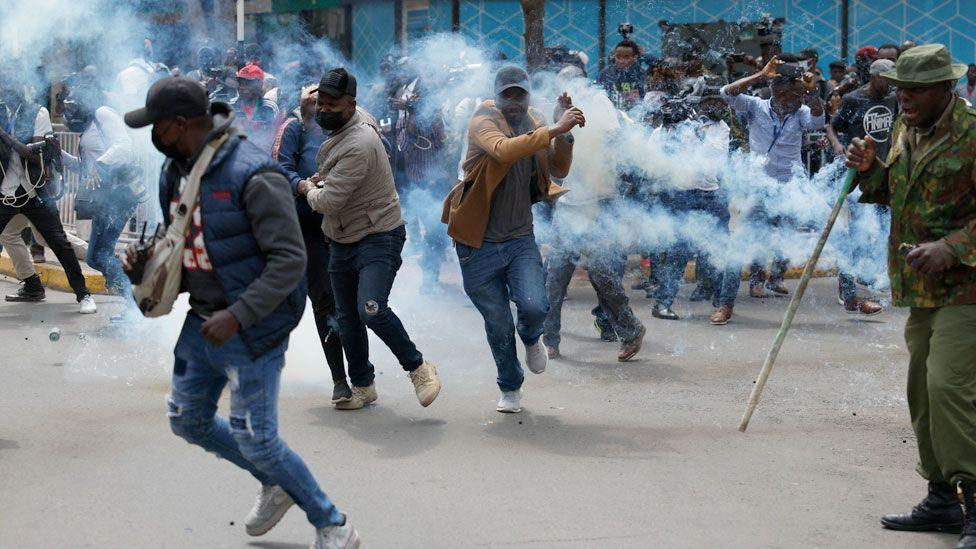
In June 2024 the Kenyan Parliament passed into law the heavy Finance Bill 2024 despite repeated calls by the public to amend it. The Kenyan Gen-Zs then led protests against this Act demanding that the government do away with it. The initially peaceful protests turned violent when police used tear gas, water cannons, and live bullets to suppress it. This excessive use of force by the police led to injuries and deaths, including minors. Appeals for justice and accountability for police brutality went unanswered.
In June and July 2025, the Gen-Zs returned to the streets, not only to demand accountability for the ongoing injustice but to remember Kenyans killed by state authorities during peaceful demonstrations over the years. Again, these protests turned deadly with violent response from the police.
As protests continued Kenyans demanded answers, justice and accountability for the killings and injuries people were subjected to. These demands are not criminal but rightful claims to freedoms guaranteed by the Kenyan Constitution— freedoms of assembly, expression, and association. Instead, the government doubled down, with a “shoot in the leg” order and even military deployment against unarmed citizens.
Many more Kenyans died in the process, including those killed by the so-called “stray bullets” while at home or minding their own business. Children were killed in their homes, businesses destroyed as goons freely went on a looting spree, and lives shattered.
Justice Beyond Money

After a lot of hue and cry for justice, the government set up a compensation task force whose mandate overlaps many other existing legally recognized and constitutional bodies that exist including the Kenya National Commission on Human Rights, the Commission on Administrative Justice, the Independent Policing Oversight Authority, the justice department etc.
While some people have welcomed the idea, many Kenyans are against it for many reasons. The matter is now in court to stop the process and demand a proper justice and accountability mechanism. The government rhetoric has been very nebulous at best. At first glance, this looks compassionate, and it rightly should because, many of the victims came from humble backgrounds and need the money having lost their breadwinners in the protests.
Some pundits and influencers have argued that the establishment of the Panel is a way of fast-tracking a rather slow, lengthy and complicated justice and compensation processes for victims, at least doing something to show that the government cares. After all, who will frown at the idea of giving some kind of compensation to a poor hurting family who has lost a loved one in the manner in which these people were killed?
But payouts alone are not justice. They are not enough. They can be easily abused and only end up as a shortcut — a way to sidestep the hard work of truth-telling, accountability, and reform.
Sidestepping the Hard Work
Payouts are just a scratch in the surface of the appropriate and internationally recognized process of dealing with human rights violations. Victims’ families and survivors need a more comprehensive justice mechanism including appropriate remedies.
We’ve seen this pattern before. The Mau Mau War Veterans who suffered terrible atrocities under the British colonial government while fighting for our independence received a token settlement and a monument, but no apology.
Other victims of state violations of human rights such as the late Hon. Kenneth Matiba, and the survivors of the Nyayo torture chambers during the Moi era received a token payment compensation with no apologies, no accountability of the perpetrators.
We have continued to witness arrests of peaceful protesters and killings during protests, essentially, no accountability, no deterrence and a class whose rights are erased.
Reparations and Remedies Rights

Today, families of protest victims risk the same erasure. However, there is a broader issue here, beyond the victims of these violent repression of protests.
The proper mechanism is a difficult, long and painstaking process of reparations, which deals with the impunity that is perpetuated by governments. Governments do not like reparations because its process include acknowledgement of violation and apology for the violations before victim compensation can be done.
What Kenyans are asking of the government is reparations. It goes beyond just money. We want an acknowledgement, an apology and a commitment that never again will these violations be committed in our land, and that the government will respect the Constitution the office holders took an oath to defend as well as in line with the International Law under the UN Principles of Principles and Guidelines on the Right to a Remedy and Reparation.
Reparations are a cornerstone of transitional justice, designed to restore dignity and redress harm suffered by victims of systemic repression and conflict. They hold perpetrators and institutions accountable by providing both material and symbolic remedies—ranging from financial compensation and restoration of rights to truth-telling, apologies, and commemoration.

According to the United Nations Basic Principles on the Right to Remedy, reparations take five main forms:
• Restitution: Restoring victims to their prior condition, such as reinstating jobs, property, or citizenship.
• Compensation: Quantifying and addressing economic, physical, mental, and moral injury.
• Rehabilitation: Offering medical, psychological, social, and legal support.
• Satisfaction & Guarantees of Non-Repetition: Ensuring accountability through truth disclosure, searching for, identifying and turning over the remains of dead and disappeared persons, official apologies, judicial rulings, sanctions against perpetrators, and institutional reforms that offer safeguards against repetition of the violations or similar violations. Sometimes these include memorialization such as monuments and commemorations.
Together, these measures transform reparations from symbolic gestures into concrete acts of justice—repairing past wrongs while preventing future violations. Short of this, we risk creating a precedent where the state can continue to violate our rights then use our money for compensation, and we are really left with no recourse.
Injustice Against One Is Injustice Against All
While the courts decide the way forward, what would help us move the needle is if we saw a serious move toward reparations, justice and accountability coupled with a serious commitment to respecting Kenyans’ human rights with satisfactions and guarantees of non-reparations.
There should be immediate and long term measures to deal with the effects and root causes of the injustices-for instance calls for prosecution, lustration, reparations, forgiveness (where possible), apology, reconciliation, policy reforms etc.
Reparations are about dignity and justice. They demand acknowledgement of wrongdoing, apologies, prosecutions, and reforms that guarantee such abuses never happen again. Compensation alone is a bandage on a deep wound. Kenyans deserve healing — and that means justice.
We deserve a guarantee that our rights as provided for in the Constitution will be respected because injustice against one is injustice against us all.


Comments